Sauna for Athletes: Recovery, Performance, Heat Adaptation
Post-workout sauna produces measurable endurance gains within two weeks via plasma volume expansion and heat adaptation. The protocol the research supports.
Most people who use saunas use them for relaxation. Endurance athletes use them as a training tool — and the sports-science literature has gradually caught up to what Finnish runners and Norwegian cross-country skiers figured out decades ago. Done correctly, post-training sauna can produce measurable performance gains, particularly in events affected by heat or by plasma-volume-limited cardiac output.
This is not just sweating for its own sake. There is a specific protocol — sometimes called heat acclimation or post-exercise hyperthermia — that produces meaningful adaptations in 7–14 days. The catch is that the same protocol can also blunt recovery if it's badly timed or stacked on top of an already-overloaded training week.
Here is what the research actually supports, what the limits are, and how to integrate sauna into a serious training plan.
The headline result: Scoon 2007
The study most often cited as the starting point for athletic sauna use is a small but well-designed trial out of New Zealand, published in 2007 in the Journal of Science and Medicine in Sport. Six male distance runners did three weeks of normal training, then added 30-minute post-run sauna sessions (87°C) after each session, four times a week, for three weeks.
The outcome: a 32% improvement in time-to-exhaustion at fixed running speed, and a 1.9% improvement in 5K race time. Plasma volume increased by 7%. Red blood cell volume increased modestly.
A 1.9% improvement is not small. At elite level, that's the difference between making and missing an Olympic team. Subsequent work by Stanley et al. (2015) and Kirby et al. (2021) replicated key parts of the finding using cyclists and trained runners, with effect sizes in the same range.
The mechanism is now well-established: heat exposure post-exercise drives plasma volume expansion, improves thermoregulatory efficiency, and produces what's called the "passive heat acclimation" response — the same set of adaptations that you'd get from training in 35°C heat, without having to actually train in that heat.
What heat adaptation actually does
Performance gains from regular post-exercise sauna come from several stacked mechanisms.
Plasma volume expansion
The body responds to repeated heat stress by expanding plasma volume — typically by 5–10% within 7–14 days of consistent exposure. More plasma volume means higher stroke volume at the same heart rate, which means more cardiac output for the same cardiovascular cost. Endurance performance is often plasma-volume-limited, so this is a direct lever.
Lower core temperature at given workload
Heat-adapted athletes start sweating earlier in a workout, sweat more efficiently (lower sodium, higher volume), and run a lower core temperature for any given effort. In hot conditions, this is the single biggest factor separating performers from sufferers. In cool conditions, it still helps because heat dissipation from working muscles is more efficient.
Heart rate at given workload
Because cardiac output is more efficient with expanded plasma volume, heart rate at a given pace drops by 3–7 bpm after 1–2 weeks of heat adaptation. This is genuinely useful in interval work and at lactate threshold.
Possible HSP-mediated adaptations
Heat shock proteins (HSP70 in particular) rise after sauna exposure and are involved in cellular stress resistance and protein folding. The performance relevance is harder to pin down, but the cellular biology is consistent with broader stress-tolerance benefits.
What the protocol actually looks like
This is the part most people get wrong. There's a difference between "I sit in the sauna sometimes" and "I'm running a heat acclimation protocol." For the performance benefits in the literature, the protocol matters.
Frequency. 3–5 sauna sessions per week, ideally after training rather than before. Less than three is below threshold for most adaptations. More than five gets diminishing returns and risks accumulated load.
Timing. Within 30 minutes of finishing your workout. The body is already in a heat-stressed state; piggybacking on that amplifies the adaptive signal. Sauna 6 hours after training works for relaxation but produces a much weaker acclimation response.
Duration. 25–35 minutes total per session. The 30-minute mark in the original Scoon paper has become the de facto standard. This can be split into rounds with cool-off breaks or done as one extended exposure if you can tolerate it.
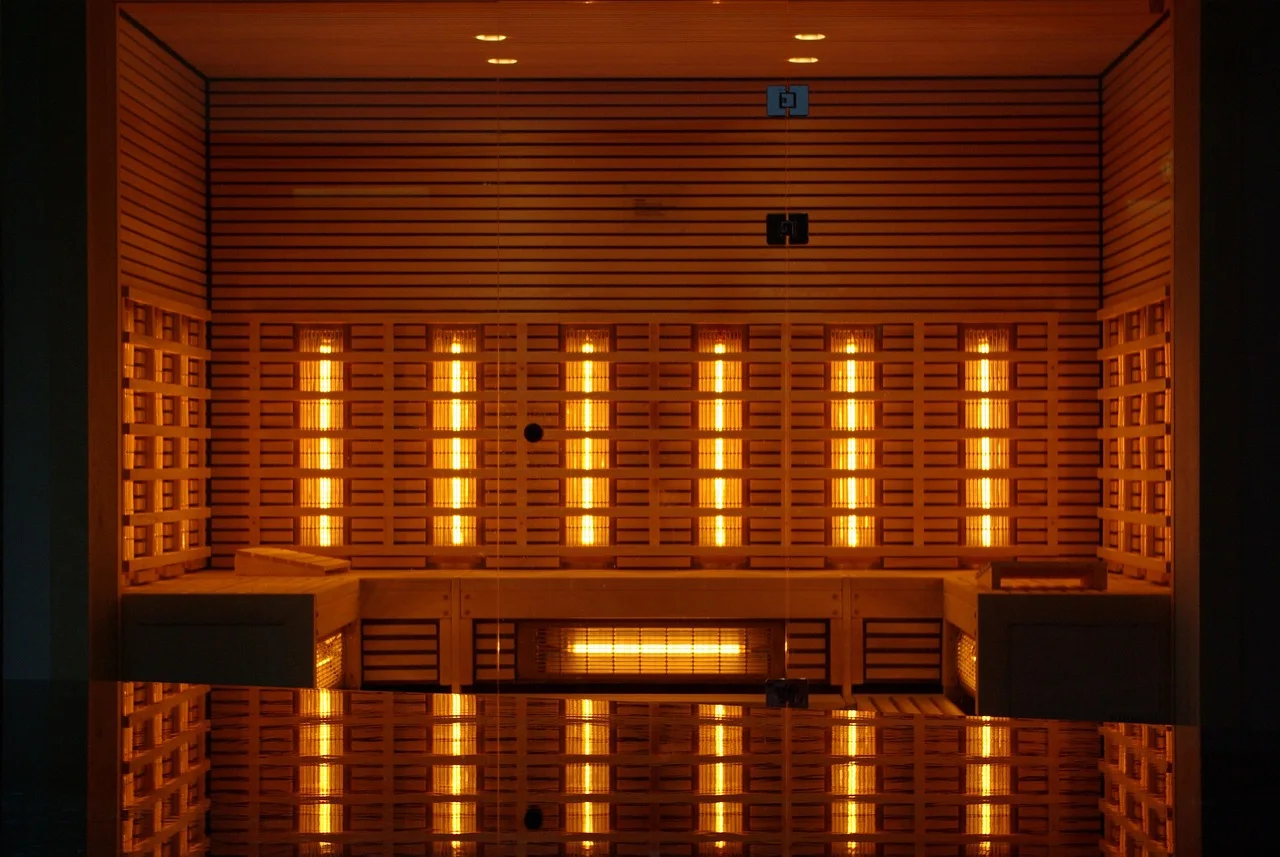
Temperature. 80–95°C traditional Finnish-style. The sports-science studies have used Finnish-style; comparable infrared protocols exist but the evidence base is thinner. Don't substitute steam room — the lower air temperature produces a much weaker acclimation signal.
Cycle length. The performance gains build over 7–14 days of consistent use, plateau around weeks 3–4, and decline if you stop. Most coaches now treat sauna acclimation like aerobic fitness — something to maintain, not something you can stockpile.
Race tapering. Continue sauna sessions through the taper, but at reduced duration (15–20 minutes) and reduced frequency (2–3 per week). This maintains adaptation without adding fatigue. Stop sauna 24–48 hours before a target race so you arrive fresh.
"We now treat heat acclimation as a mandatory training block in the lead-up to any major championship — same as altitude. The marginal gains are too consistent to ignore." — National team endurance coach, Outside magazine, 2022
Where the literature is more cautious
Three areas where the picture is messier and the marketing tends to overstate.
Recovery vs. additional load
A post-workout sauna is sometimes pitched as "active recovery" — but it is not. Heat exposure at 80°C+ for 30 minutes is itself a cardiovascular and metabolic load. On a heavy training day, stacking sauna on top of training can deepen fatigue rather than relieve it.
The practical rule: post-workout sauna works as a recovery and adaptation tool if the training load is moderate and well-managed. It backfires if you're already overreached. If you're catching colds, sleeping poorly, or seeing performance drop, drop sauna sessions before you drop training sessions.
Strength and power athletes
The plasma-volume mechanism mainly benefits endurance athletes. The data for strength and power athletes is much thinner. There's some evidence that sauna doesn't hurt strength training (no muscle protein synthesis disruption at standard protocols), but the performance upside is smaller and more speculative.
A small amount of post-strength-training sauna probably produces general thermoregulatory and cardiovascular benefits without compromising hypertrophy. Long heat exposures during a heavy strength block are not well-studied and worth being conservative about.
Hydration and electrolytes
The sweat losses in a 30-minute Finnish sauna session typically run 0.5–1.0 kg, occasionally more. Stacked on top of an already-sweaty training session, that's a real fluid debt. Most athletes need to consciously rehydrate post-sauna more than they're used to — 1.5× the fluid weight lost is the standard recommendation, with some sodium replacement on heavy sessions.
Don't drink the entire bottle in 10 minutes; spread it over the next 90 minutes. Don't go to bed under-hydrated, and don't skip electrolytes if you're sweating heavily multiple times per week.
A two-week heat acclimation block
For an endurance athlete leading into a hot-weather race or aiming for general performance gains, here is a defensible block plan:
Week 1.
- Days 1, 3, 5, 7. Post-workout sauna, 25 minutes total (split into 2 × 12-minute rounds with a 5-minute cool-down between).
- Temperature 80°C.
- Hydrate 1.5× sweat losses.
Week 2.
- Days 1, 3, 5, 7. Post-workout sauna, 30 minutes total (2 × 15 minutes).
- Temperature 85°C.
- Same hydration protocol.
Week 3+.
- Maintain at 3 sessions per week to preserve adaptations.
- Reduce duration in race week.
Track resting heart rate, HRV if you have it, and morning weight. Plasma volume expansion should show up as a slight (0.5–1 kg) increase in stable weight and a small drop in resting HR within the first 7–10 days. If you don't see those signs after two weeks, your dosage is probably too low.
Risk and when to skip
A few situations where the protocol is not a good idea:
- Already accumulated fatigue. If your training load is high and recovery markers are flagging, sauna is more burden than benefit.
- Illness. Even mild upper respiratory infections; the cardiovascular load and sweat losses don't help.
- Hot environmental training. If your sport-specific training is already happening in heat (mid-summer outdoor cycling, e.g.), additional sauna heat acclimation is redundant and may overshoot.
- Pre-race. Skip 24–48 hours before a target competition. Show up fresh.
- Cardiovascular conditions. The general contraindications apply — see our sauna and heart health guide for details.
Practical context
The Scandinavian endurance scene has been quietly using this for decades. Norwegian cross-country skiers, Finnish distance runners, and Swedish triathletes all build sauna into their training as a matter of course; it's part of the cultural infrastructure. American and British athletes have caught up in the last ten years, partly through the dissemination of the Scoon-derived literature.
If you're traveling and want to test a heat block in a place where the post-training sauna culture is already built in, a week in Helsinki or Tampere makes 4–7 sessions per week trivially easy. The Norwegian scene in Oslo and Bergen is increasingly oriented to athletes specifically — public floating saunas and post-workout drop-in slots are common.
Bottom line
Post-workout sauna at 80–90°C for 25–30 minutes, 3–5 times per week, for 2 weeks produces measurable endurance performance gains — typically 1–3% in time-trial events. The mechanism is plasma volume expansion and improved thermoregulatory efficiency. Maintain with 3 sessions per week thereafter, reduce to maintenance during taper, stop 24–48 hours before competition.
The protocol is not magic. It is, however, one of the better-supported "marginal gains" in endurance training, and it's available to anyone with reliable sauna access and a training plan that can absorb the additional load.
Find a sauna near your training. Browse listings or read our routine for beginners if you're building the habit from zero.