Sauna and Skin: What Actually Changes (and What Doesn't)
Sauna improves microcirculation and barrier function in healthy skin, can worsen rosacea or eczema. The dermatology evidence and a skin-supportive routine.
The marketing around sauna and skin is loud, contradictory, and often wrong. Wellness brands promise "deep detox" and "glowing skin" from a single session. Skeptical dermatologists point out that sweating doesn't expel toxins and that high heat can worsen rosacea. Both can be cited from the same room.
The honest version is more nuanced. Regular sauna use does change your skin in several measurable ways — some of them benefits, some of them costs, and some of them depending entirely on your skin type and what you do after the session. The mechanism isn't detox. It is mostly about blood flow, hydration handling, and the skin barrier.
Here is what the dermatology literature actually shows, what to expect from a habit, and how to keep the benefits while minimizing the costs.
What heat does to your skin in real time
When you sit in an 80–90°C sauna, your skin is the body's primary heat-dissipation organ. Several things happen quickly.
Skin blood flow increases dramatically — by a factor of 3–10 in surface microcirculation. This is the body's main strategy for moving core heat to the surface. The visible flush is the marker of effective heat dissipation.
Sweating begins within 3–7 minutes. A typical 20-minute Finnish sauna session produces 0.5–1.0 kg of sweat in most people. Sweat is mostly water with sodium, chloride, potassium, and trace minerals; it is not a "detoxification" mechanism in any clinically meaningful sense (the kidneys and liver do nearly all of that work).
Skin temperature rises to 38–40°C, sometimes higher in shorter exposure spikes. The deeper layers of the skin — the dermis — warm too, though more slowly.
Sebum production temporarily increases. Sebaceous glands are heat-sensitive; oily and combination skin may notice this acutely.
The stratum corneum (the outer skin barrier) loses water through both sweat and increased trans-epidermal water loss. The skin can feel temporarily soft and pliable during and immediately after a session, then dry an hour later as the barrier recalibrates.
This is the acute picture. The longer-term changes depend on what happens repeatedly over weeks and months.
What regular sauna use changes in your skin
The dermatology research on regular sauna use is thinner than the cardiovascular literature, but several findings are reasonably established.
Improved microcirculation and skin barrier function
A 2008 study from the University of Jena examined sauna's effect on stratum corneum function in healthy adults. After eight weeks of regular use, participants showed measurable improvements in skin hydration and barrier recovery time — the speed at which the barrier reseals after disruption. The mechanism appears to be repeated micro-stress to the skin barrier triggering improved baseline maintenance, similar to how exercise stresses muscles into adaptation.
Slightly more even skin pigmentation
Improved capillary function over months tends to produce more even skin tone in people with circulation-related complexion issues — pallor, blotchy redness from poor microcirculation, cold-weather skin dullness. The effect is modest but real for the right skin types.
Possible improvement in sebum balance
The picture is mixed and depends on baseline. Oily skin sometimes improves with regular sauna use as the rapid sweat flushing of pore contents reduces visible sebum buildup. Dry skin sometimes worsens because the trans-epidermal water loss accumulates. Combination skin is unpredictable and depends on how aggressively post-sauna moisturization is handled.
Inflammatory acne: small but real benefit
A 2007 Finnish study on sauna users with mild inflammatory acne reported modest improvements over 12 weeks. The mechanism is likely a combination of improved circulation, mild antibacterial effect of repeated heat, and the increased compliance with washing routines that often accompanies a sauna habit. This is not a treatment, but it's one of the few interventions where heat shows measurable benefit rather than harm for acne-prone skin.
Wound healing and aged skin
Heat shock proteins — the same HSP family implicated in cardiovascular and longevity effects — also play roles in skin repair. There is preliminary evidence that regular heat exposure improves wound healing speed in older adults, likely through HSP-mediated effects on fibroblast function. This is most relevant for people in their 60s and 70s and is more inferential than the other findings.
Where sauna can make skin worse
The cost side is real and worth being honest about.
Rosacea and flushing-prone skin
Sauna is one of the most reliable triggers for rosacea flares. The vasodilation that delivers cardiovascular benefit also dilates the dysfunctional surface capillaries that drive rosacea symptoms. People with established rosacea generally tolerate sauna poorly, and dermatologists routinely recommend avoiding it.
If you have rosacea and want to try, do it cautiously: shorter sessions (8–10 minutes), lower temperatures (70–75°C if you can find them), and an immediate cool rinse afterward. Stop entirely if you see flare patterns.
Eczema and atopic dermatitis
Mixed picture. Some atopic users find sauna helpful — the immediate moisture and the post-session moisturizing routine combine to soothe skin. Others find it actively worsens flares because the trans-epidermal water loss accumulates faster than the barrier can compensate. The variable seems to be how aggressively you moisturize within five minutes of leaving the sauna. Don't dry off and walk away; apply moisturizer to still-damp skin, immediately, every time.
Dry skin in winter
Winter air is already low-humidity. Layering a high-temperature, low-humidity Finnish sauna on top of that environment can compound trans-epidermal water loss to the point where skin feels persistently tight, itchy, or flaky. Steam rooms and bio-saunas (60°C, high humidity) are gentler alternatives in winter; if you stay with traditional sauna, the post-session moisturizer routine becomes mandatory rather than optional.
Cold sores (HSV-1)
Heat exposure can trigger reactivation in people with established HSV-1. If you're prone to facial cold sores, particularly perioral, sauna sessions can be a trigger. There's no good way to predict which sessions will provoke this; if you notice a pattern, antiviral prophylaxis on heavy sauna days is worth a conversation with your physician.
Mature skin sensitivity to repeated heat-cold contrast
The cold plunge / cold shower component of a serious sauna routine produces vascular contraction-dilation cycles that, over years, may exacerbate broken capillaries (telangiectasias) on the face and chest in some people, particularly those with thin or sun-damaged mature skin. This is a small effect for most people but worth being aware of.
"The dermatology evidence supports moderate sauna use as net-positive for healthy skin and net-negative for already-inflamed or sensitive skin. The line between those categories is the practical question." — Review article, Journal of the European Academy of Dermatology and Venereology, 2020
A skin-supportive sauna routine
If you want the benefits while minimizing the costs, the protocol matters as much as the frequency.
Pre-sauna. Remove makeup. Hydrate (300–500 ml water 30 minutes before). Skip heavy moisturizers and oils — they trap heat and clog pores under high temperature.
During the session. Wipe sweat off your face periodically rather than letting it pool. Don't touch your face with hands that have been pressing against benches.
Cool-down. A cool rinse (not ice-cold) within 5 minutes of leaving the hot room is the dermatology-friendly option. Avoid hot showers immediately post-sauna; they prolong the trans-epidermal water loss.
Post-sauna routine. This is the single most important part. While skin is still slightly damp from the cool rinse:
- Gentle cleanser if your skin is oily or combination, just water if normal-to-dry.
- Moisturizer applied to damp skin within 3–5 minutes of cool rinse. The damp-skin moisturizing approach is the standard dermatology recommendation for atopic/eczema-prone skin and works for everyone else too.
- Avoid heavy retinoids, acids (AHAs/BHAs), or other irritants for the first 4–6 hours. Skin is more permeable post-sauna; ingredients you tolerate fine normally can sting and inflame in this window.
Hydration. 1–1.5× the fluid you sweated, spread over the next 90 minutes. Internal hydration affects skin appearance more than any topical can.
Sun exposure. If you're sauna-then-outdoor on a sunny day, the post-session vasodilation amplifies UV redness. Sunscreen with SPF 30+, applied 15+ minutes before going outside.
Special cases
Acne-prone skin
Lower the cumulative session temperature (75–80°C) and shorten visits if you notice post-sauna breakout patterns. Wash your face within an hour after exit; sweat plus surface bacteria is a setup for inflammatory comedones. Don't use sauna on heavy product or makeup days.
Sensitive or post-procedure skin
Skip sauna for 7–14 days after laser treatments, chemical peels, or microneedling. The vasodilation and heat exposure undo the controlled skin response that those procedures rely on. Same for sunburn — sauna on already-inflamed skin can exacerbate damage.
Older skin (60+)
The benefits accrue, but so does sensitivity. Lower temperatures (75–80°C), shorter sessions (10–15 minutes per round), and aggressive post-session hydration become more important. The post-sauna damp-skin moisturizer routine is non-negotiable in this group.
Steam room vs. traditional vs. infrared for skin
Each modality affects skin differently.
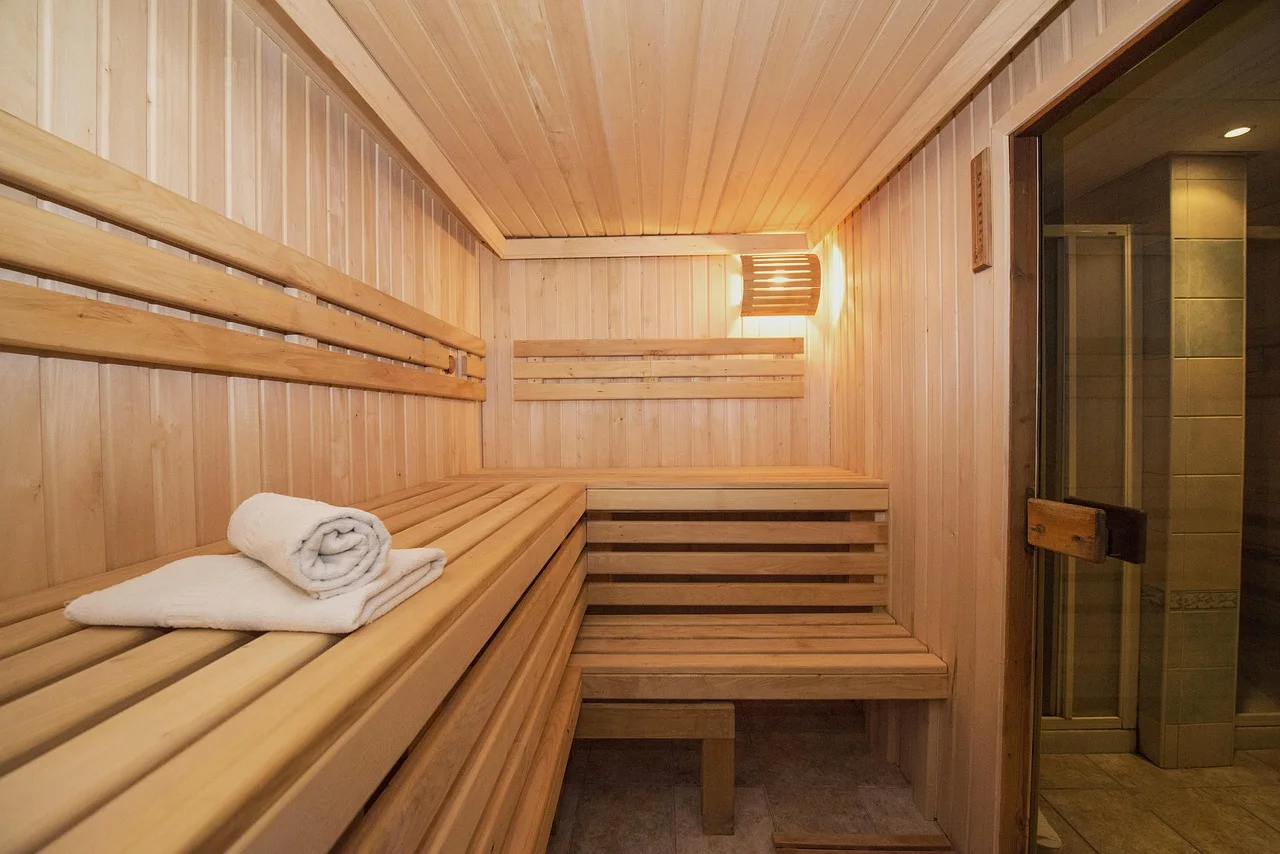
- Traditional Finnish (80–90°C, low humidity). Strong vasodilation, heavy sweating, significant trans-epidermal water loss. Best for circulation benefit, hardest on barrier function. Mandatory post-session moisturization.
- Steam room (45°C, near-saturated humidity). Gentler vasodilation, no trans-epidermal water loss (skin actually gains surface moisture). Better for dry, sensitive, or atopic skin. Less cardiovascular benefit but easier on the skin barrier.
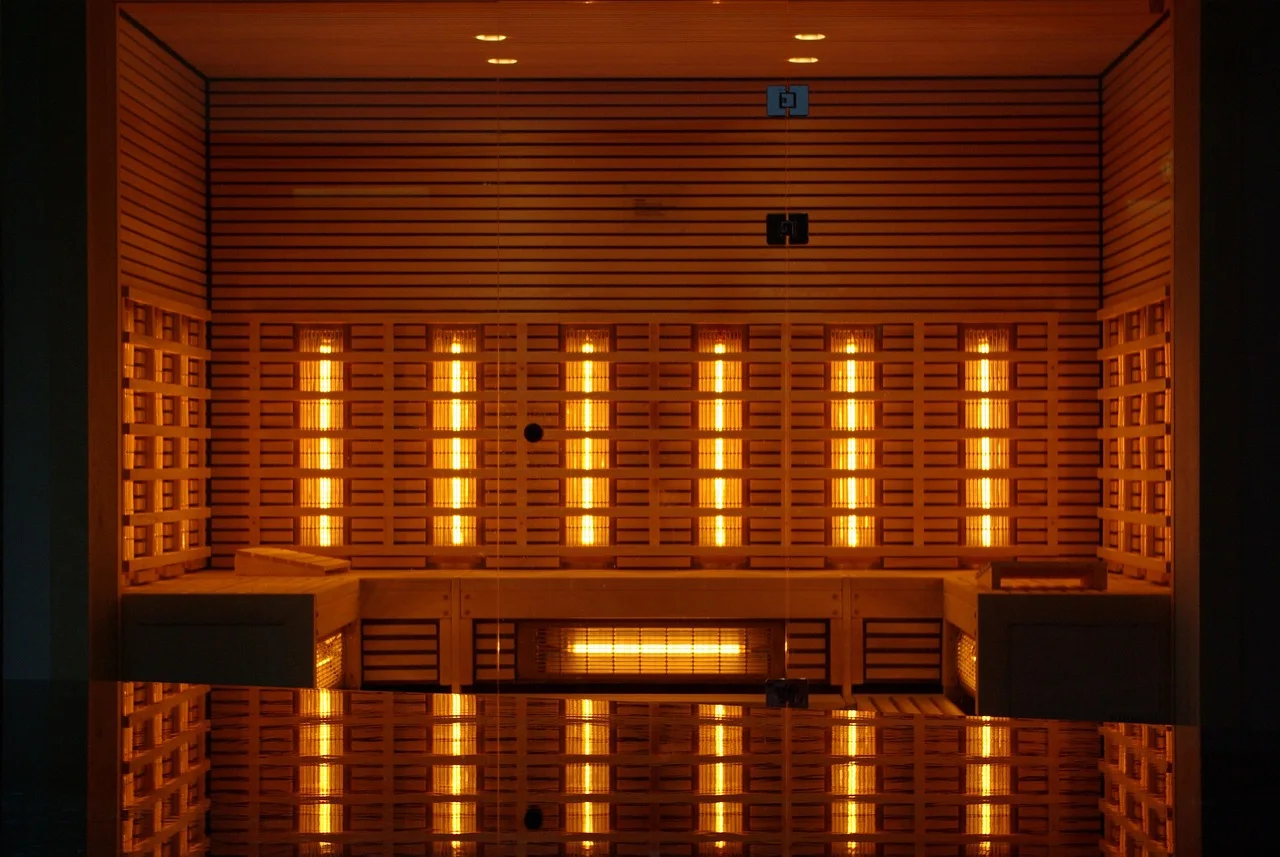
- Infrared (50–60°C, low humidity). Moderate sweating, less aggressive surface heating. Generally well-tolerated by sensitive skin. Less data on long-term skin effects than traditional sauna.
- Bio-sauna (60°C, moderate humidity). A useful middle ground; many German Saunalandschaften offer these as gentler alternatives.
For people whose skin doesn't tolerate traditional Finnish sauna, the steam room or bio-sauna alternatives are not consolation prizes — they're often the better choice.
Bottom line
Regular sauna use (2–4 sessions per week) with proper post-session moisturization improves skin barrier function, microcirculation, and tone in most healthy adults. It can mildly help inflammatory acne. It often worsens rosacea, can worsen eczema if post-session care is sloppy, and can trigger HSV-1 in susceptible people. The benefit-cost balance depends almost entirely on your skin type and your post-session routine.
It is not "detox" and it does not replace topical care. It is a circulation and barrier-conditioning intervention that compounds with consistent use over months. For most skin, that's a worthwhile addition. For inflamed, sensitive, or actively flaring skin, choose steam room or skip entirely until things settle.
Find a sauna with multiple options. German Saunalandschaften in Berlin, Munich, and Baden-Baden typically offer traditional, bio, and steam in one ticket — the best way to find what your skin actually tolerates. Browse listings for facilities near you.