Sauna and Longevity: What the Mortality Data Shows
Finnish data links 4–7 saunas a week to 40% lower all-cause mortality. The mechanism, the dosage, and where the longevity claim gets oversold.
The longevity industry has discovered saunas. In the last five years, every podcast, supplement company, and biohacking newsletter has cited the same Finnish numbers: men who took 4–7 saunas a week had a 40% lower all-cause mortality risk than men who took one. The implication, repeated until it sounds settled, is that sauna is a mortality intervention on par with regular exercise.
The numbers are real. The implication is mostly right. But the longevity claim is also the place where sauna research gets oversold the fastest, and the difference between "sauna is associated with lower mortality in observational data" and "sauna will make you live longer" is real and worth understanding.
Here is the longevity case for sauna, what we know about why it works, and where the honest uncertainties sit.
The headline numbers
The foundational study, again, is the 2015 paper from the University of Eastern Finland in JAMA Internal Medicine. Researchers followed 2,315 middle-aged Finnish men in the KIHD (Kuopio Ischaemic Heart Disease) cohort for a median of nearly 21 years, tracking sauna habits and mortality.
After adjustment for age, smoking, BMI, alcohol, blood pressure, cholesterol, diabetes, and physical activity:
- All-cause mortality: 40% lower in men taking 4–7 saunas per week vs. 1.
- Cardiovascular mortality: 50% lower.
- Sudden cardiac death: 63% lower.
- Stroke incidence: 14% lower per session per week.
A 2017 follow-up extended this to dementia: men with the highest sauna frequency had a 66% lower risk of being diagnosed with dementia compared to the lowest-frequency group, with the protective effect largest for Alzheimer's specifically.
A 2018 paper in BMC Medicine, using a separate Finnish cohort of 1,688 men and women, replicated the cardiovascular protection in both sexes.
That's the strong version of the longevity claim. It is one of the largest effect sizes in any non-pharmaceutical lifestyle intervention literature, comparable to the mortality reduction associated with regular moderate exercise.
"If sauna were a drug with this effect size, it would be a blockbuster. Because it isn't a drug, it gets less attention than the data deserves." — Jari Laukkanen, lead author, Mayo Clinic Proceedings commentary, 2018
What the mechanism actually does
The mortality benefit isn't magic. It maps onto specific physiological adaptations that are reasonably well understood.
Cardiovascular fitness without joint impact
A 30-minute sauna session at 80–90°C produces a cardiac response similar to moderate-intensity exercise: heart rate climbs to 100–150 bpm, cardiac output roughly doubles, and peripheral vascular resistance drops sharply. Repeat this three or four times a week and you're getting many of the same vascular adaptations as a brisk-walk-three-times-a-week program — improved endothelial function, lower arterial stiffness, better autonomic balance — without the orthopedic load.
This matters most for older adults whose joints can't tolerate aggressive aerobic exercise but whose cardiovascular system can still adapt. The Finnish data is strongest for middle-aged-to-older populations precisely because the alternative dose-equivalent of activity is harder for them to achieve.
Heat shock proteins and cellular stress resistance
Repeated heat exposure upregulates heat shock proteins, particularly HSP70 and HSP90. These proteins are involved in protein folding, cellular stress resistance, and clearance of misfolded proteins. The link to longevity is mechanistically plausible — protein homeostasis decline is a hallmark of aging — but the human-level evidence connecting HSP induction to actual lifespan extension is still inferential, not proven.
Improved vascular health and the dementia connection
The 66% dementia risk reduction is one of the more striking findings, and it's almost certainly downstream of the same vascular mechanisms that protect against cardiovascular disease. Vascular dementia and Alzheimer's both have substantial vascular contributions; anything that improves cerebral perfusion and arterial compliance over decades has measurable cognitive consequences.
The dementia data is also the part of the longevity story most often understated. Mortality is the headline, but quality-of-life-adjusted longevity — living longer and living independently — is what most people actually want, and the dementia signal is what makes sauna interesting on that dimension.
Inflammation and metabolic health
Regular sauna users show lower CRP and IL-6 in cross-sectional Finnish data. Inflammatory aging — sometimes called "inflammaging" — is increasingly central to mainstream longevity theory, and chronic low-grade inflammation predicts cardiovascular events, cognitive decline, and frailty independently of other risk factors. Reducing it through repeated heat exposure is mechanistically consistent with the observed mortality benefits.
Where the longevity claim gets oversold
Three patterns to watch for.
Observational, not interventional
The Finnish data is correlational. No one has run a randomized trial of "sauna 4x weekly for 20 years" against a control group, and no one is going to. Frequent Finnish sauna users may share unmeasured lifestyle traits that themselves protect against mortality — better social integration, more rural living, different dietary patterns, or selection effects (people who self-select into 7 saunas per week may simply be people whose general health allows it).
The size of the effect makes pure confounding unlikely to explain everything. The Finnish researchers were thoughtful about adjusting for known confounders. But "regular sauna users live longer" is a slightly weaker claim than "sauna causes longer life," and it's worth keeping the difference in mind.
Generalization to other modalities
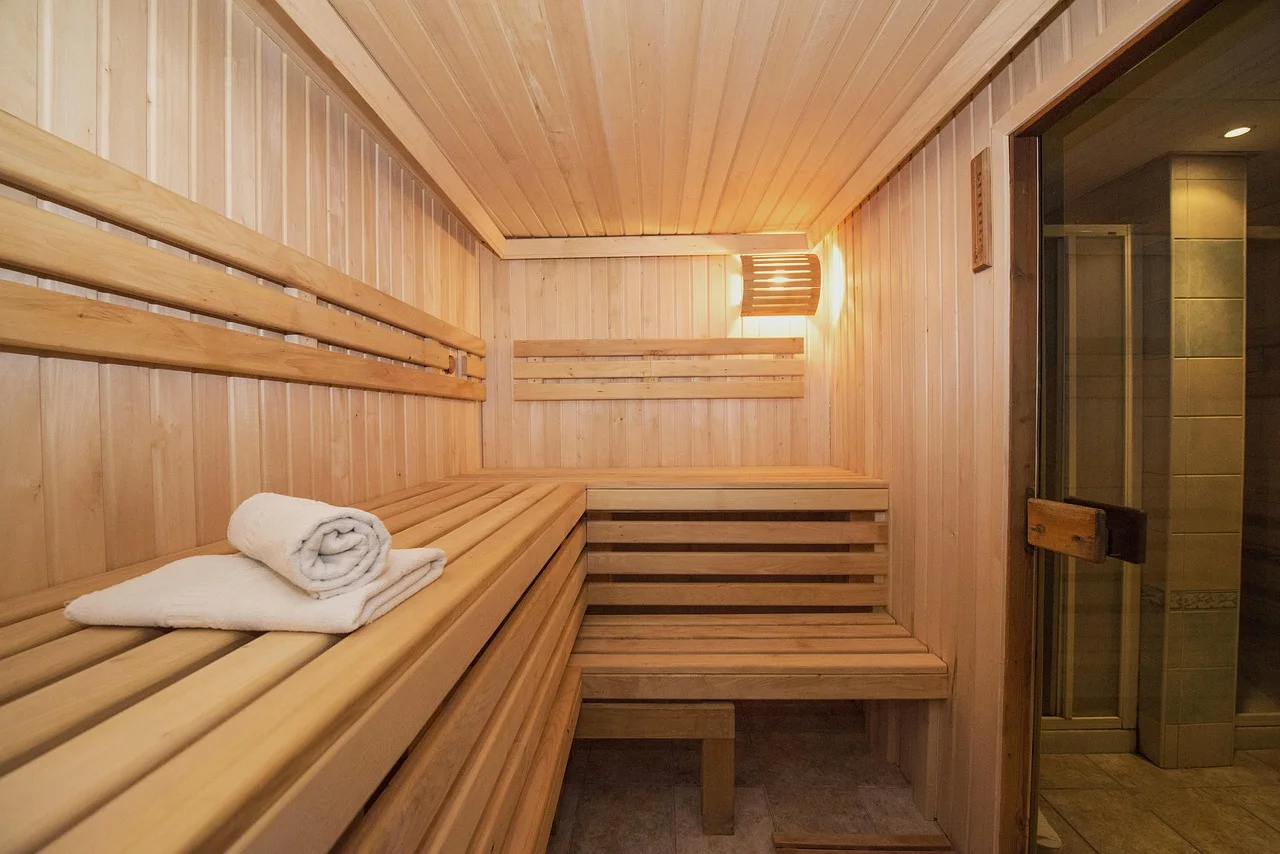
The KIHD cohort sat in 80–90°C Finnish-style saunas, mostly with löyly (steam from water on stones), 1–2 sessions per visit, in homes and small public bathhouses where sauna was a daily-life infrastructure rather than an episodic wellness practice. The findings don't automatically transfer to:
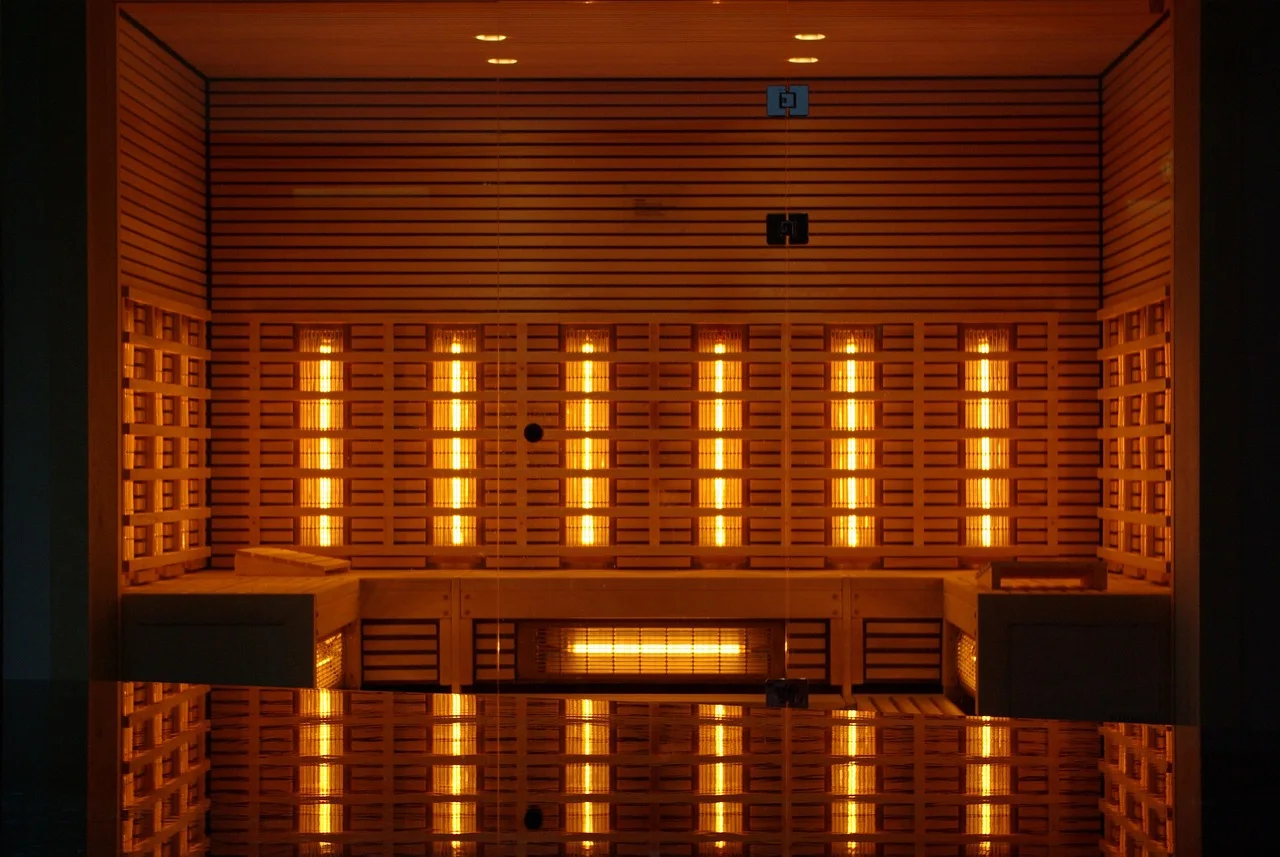
- Infrared saunas at 50–60°C (much weaker thermal load)
- Steam rooms at 45°C with high humidity (different mechanism)
- Hot tubs (passive immersion, much smaller cardiovascular response)
- Once-a-week-on-vacation sauna (frequency below the threshold that drives adaptation)
The mechanism is heat-stress-driven cardiovascular adaptation and HSP upregulation. Devices that deliver less of that, or are used too infrequently to drive the adaptation, won't deliver the same outcome — at least not at the magnitudes the Finnish data shows.
Stacking onto an unhealthy baseline
Sauna is not a replacement for the other longevity basics: aerobic exercise, strength training, sleep, social connection, controlled blood pressure, controlled blood sugar. It's an addition. The Finnish men in the KIHD cohort weren't sitting in saunas as their only health intervention — they were active, embedded in their communities, and living in a country with very high baseline cardiovascular care.
Adding sauna to a sedentary, isolated, untreated-hypertension lifestyle won't produce the Finnish-cohort effect sizes. It might produce a smaller benefit. It might produce no benefit. It might be actively harmful if the underlying cardiovascular state is unstable.
How the longevity dose looks in practice
Synthesizing the Finnish findings into a defensible protocol:
Frequency. 4–7 sessions per week is where the strongest effects appear. Three times a week captures most of the benefit. Twice a week is meaningfully better than once. Less than once-weekly is below the threshold for measurable mortality protection.
Duration. 19+ minutes per visit was associated with the strongest effect. Below 11 minutes, the effect was muted. Most regular users do 15–25 minutes, often split across multiple rounds.
Temperature. 80–90°C Finnish-style. Higher temperatures don't add benefit and increase risk; lower temperatures fall below the cardiovascular-stress threshold.
Duration of consistency. The mortality benefits in the data accrued over decades of consistent use. Three weeks of intense sauna won't replicate 25 years of weekly habit, regardless of marketing claims.
Cool-down. Cold-water plunges or cold showers between rounds enhance the cardiovascular training effect and aren't merely cosmetic. This isn't strictly required for the longevity benefit but probably amplifies it.
Stacking with other longevity basics
Sauna fits neatly into a broader longevity framework rather than replacing any element of it. A defensible weekly stack for an adult in their 40s–60s might look like:
- 3 × strength training (45 minutes)
- 2–3 × moderate aerobic (30–60 minutes)
- 1 × harder aerobic effort (intervals or tempo, 20–30 minutes)
- 4–6 × sauna sessions (20 minutes each)
- 7 × sleep ≥7 hours
- 1 × meaningful social contact most days
The sauna sits as the lowest-effort, highest-frequency element. It doesn't compete with the others; it amplifies the cardiovascular adaptation that strength and aerobic training produce.
For travelers and people without home saunas, the sustainable version is access — finding 3–4 places near home or work where you can drop in for 20 minutes after the gym, on the way home, or as part of an evening wind-down. Cities with built-in sauna culture make this easier. Helsinki and Tampere make 4–7 weekly sessions trivial. Berlin, Munich, and Vienna all have Saunalandschaften that turn a sauna visit into an afternoon. Stockholm and Oslo have growing scenes oriented around floating saunas and harbor venues.
Where to be cautious
The longevity case rests on consistent, decades-long use by generally healthy people. It does not extend to:
- Active cardiovascular disease. See our sauna and heart health guide for specifics.
- Recent cardiac events. Get cleared by a cardiologist before resuming.
- Severe aortic stenosis or decompensated heart failure. Avoid.
- Pregnancy in the first trimester. Conservative recommendation is to skip.
- Significant orthostatic hypotension. The post-sauna blood pressure drop can cause falls.
The sauna-and-mortality data does not say "sauna is risk-free." It says that across populations of people without acute contraindications, regular sauna use is associated with substantial mortality protection. Individual judgment, ideally with a physician, is still required.
The honest summary
Sauna 4–7 times per week, sustained over decades, is associated with one of the largest mortality benefits in the lifestyle-intervention literature. The mechanism — cardiovascular adaptation, HSP induction, anti-inflammatory effects, vascular protection of the brain — is plausible and consistent with what we know about aging biology. The effect probably extends to women and to younger adults, though the data on those populations is thinner.
It is not a substitute for exercise, sleep, or controlled metabolic health. It is the cheapest, lowest-effort longevity addition available to most people who can access a sauna 3–4 times a week. For an intervention that requires nothing more elaborate than sitting still in a hot room, that is genuinely remarkable, and worth taking seriously even if the strongest version of the longevity claim is somewhat oversold.
Build the habit. Browse listings near you, or read our companion guides on heart health, blood pressure, and the optimal sauna routine.