The Best Countries in the World for Sauna Culture, Ranked
Finland may be the home of sauna, but it is far from the only country with a deep and distinctive heat bathing tradition. Here is how the world's great sauna nations compare.
Every culture that has access to heat has, in some form, built a bathing tradition around it. The Roman thermae, the Japanese onsen, the Turkish hammam, the Russian banya, the Finnish sauna — these traditions developed independently, across thousands of years and thousands of kilometres, because the combination of heat and water appears to be a fundamental human need.
Today, the world's great sauna nations offer travellers an extraordinary diversity of heat bathing experiences. Here is how the leading countries compare.
1. Finland — The Undisputed Original
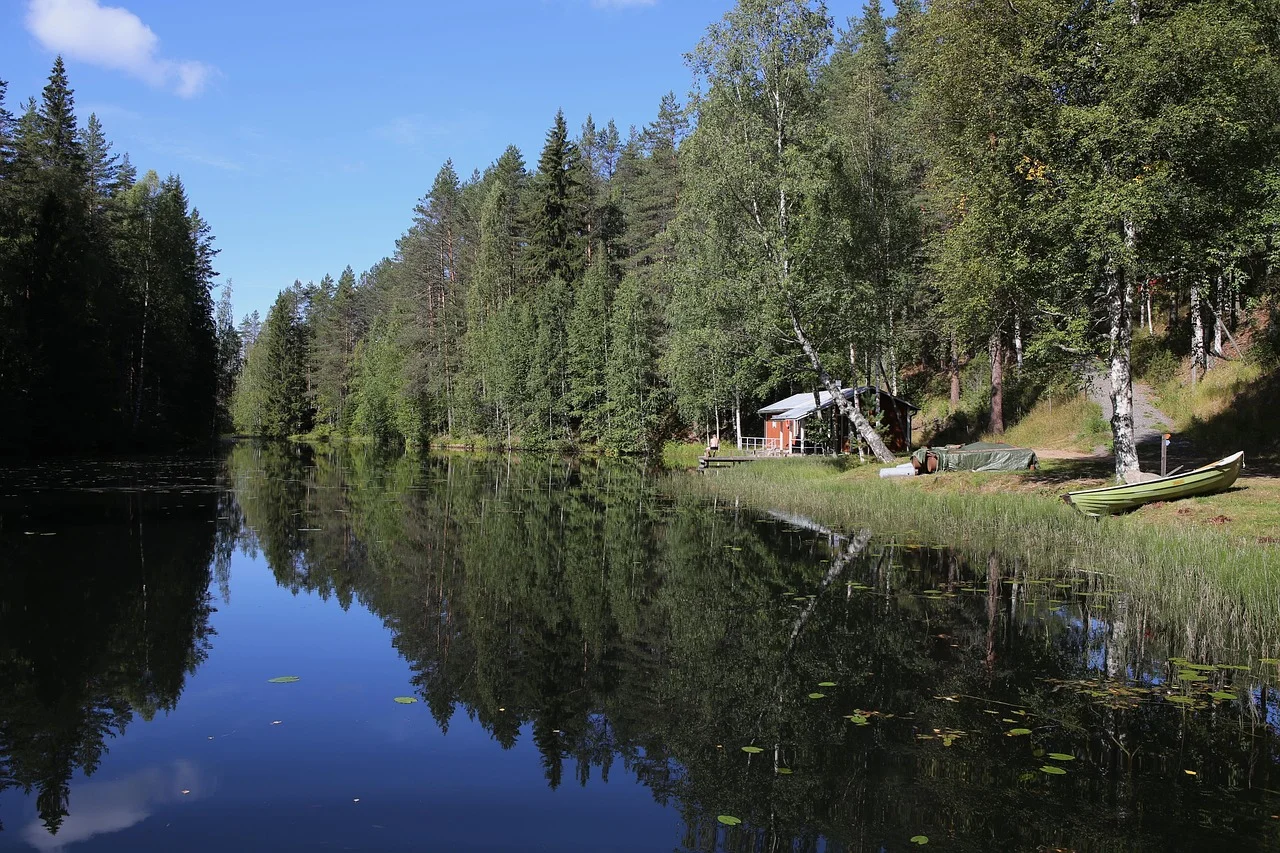
Sauna density: ~3.3 million saunas for 5.5 million people UNESCO status: Listed (2020) Defining experience: Lakeside smoke sauna with birch branches and ice swimming
There is no serious argument against Finland's position at the top of any ranking of sauna countries. The statistics alone are extraordinary — more saunas than cars, more saunas than supermarkets, saunas in parliament buildings and presidential residences. But what makes Finland truly exceptional is not quantity but depth.
The Finnish relationship with sauna goes beyond recreation or wellness. It is embedded in the national psychology, in the language, in the philosophy of life. The Finnish concept of sisu — roughly translated as resilient determination — is forged, Finns will tell you, partly in the sauna.
2. Estonia — The Smoke Sauna Nation
Sauna density: Very high, particularly in rural south UNESCO status: Listed (specifically for smoke sauna tradition, 2014) Defining experience: Traditional smoke sauna (suitsusaun) in a rural farmhouse
Estonia was the first country in the world to have its sauna tradition added to UNESCO's Intangible Cultural Heritage list — ahead of Finland by six years, and specifically for the smoke sauna tradition of the Võru region in south Estonia.
Estonian sauna culture is somewhat quieter and less internationally known than Finland's, but it is no less deep. The smoke sauna experience here is raw, elemental, and utterly unlike anything available in a modern wellness centre. Wood is burned for hours. The room fills with smoke. The smoke clears. Then you sit in the most perfectly heated room imaginable.
3. Germany — The Aufguss Masters
Sauna density: Extremely high in spa towns and urban areas UNESCO status: Not listed Defining experience: Aufguss ceremony in a large spa complex
Germany approaches sauna with characteristic thoroughness. The country has hundreds of large spa complexes (Saunalandschaft — literally "sauna landscape"), and the Aufguss tradition — in which sauna masters perform elaborate steam infusion ceremonies with towels and essential oils — is uniquely German in its theatrical sophistication.
German sauna culture is predominantly nudist, democratic, and taken very seriously. The German Sauna Association (Deutscher Sauna-Bund) certifies sauna masters, sets standards, and advocates for the health benefits of sauna. This institutional seriousness has produced the most sophisticated commercial sauna industry in the world.
4. Russia — The Banya Tradition
Sauna density: High across rural Russia UNESCO status: Not listed Defining experience: Communal banya with venik (birch branch) beating and snow rolling
The Russian banya is a close cousin of the Finnish sauna — both use wood-fired stoves and produce steam by ladling water over hot stones. The key difference is the venik: a bundle of birch, oak, or eucalyptus branches used to gently beat the body, improving circulation and releasing aromatic compounds.
The banya tradition is deeply social and ritualistic. Sessions last for hours and typically include food, vodka, cold plunges in rivers or snow, and extended conversation. It is one of the most hospitable of all the world's sauna traditions — visitors to a Russian banya are often treated as honoured guests.
5. Japan — Onsen and Sento
Density: Extremely high UNESCO status: Not listed (but onsen culture is deeply embedded in national identity) Defining experience: Outdoor ryokan onsen with mountain or forest views
Japan's bathing tradition — the onsen (natural hot spring) and sento (public bathhouse) — is a different category from Scandinavian sauna but belongs in any global survey of heat bathing culture. Japan has over 27,000 natural hot spring sources, and bathing culture is as central to Japanese life as sauna is to Finnish.
The physiological benefits of Japanese hot spring bathing overlap significantly with sauna: cardiovascular stimulation, skin benefits, stress reduction, and deep sleep. The spiritual and aesthetic dimension — rock gardens, moonlit outdoor pools, complete silence — adds a contemplative quality that is uniquely Japanese.
6. Latvia and Lithuania — The Baltic Tradition
The Baltic states south of Estonia have their own distinct sauna traditions, less internationally known but richly developed. Latvian pirts and Lithuanian pirtis are smoke sauna variants with their own rituals, including steam infusions with herbal bundles and extended cooling in forest rivers.
Both countries have invested in sauna tourism in recent years. Riga and Vilnius both have excellent urban sauna scenes, and rural farmhouse sauna experiences in both countries offer something approaching the Estonian model at very accessible prices.
7. United States — The New Convert
America does not have an indigenous sauna tradition of comparable depth, but sauna adoption has grown faster in the US than almost anywhere in the last decade. Infrared saunas have driven much of this growth — they are easier to install and operate at lower temperatures than traditional saunas.
The cities driving US sauna culture — New York, San Francisco, Portland, Minneapolis (with its large Finnish-American community) — are developing sophisticated sauna scenes with dedicated public venues, cold plunge facilities, and Aufguss programming.
8. Turkey — The Hammam Heritage
The Turkish hammam is not a sauna in the Nordic sense — it is a wet heat experience, with high humidity and lower temperatures, focused on exfoliation and the body scrub (kese). But its role in Ottoman and modern Turkish culture — as a place of cleansing, socialising, and ceremonial preparation before major life events — gives it a place in any world survey of heat bathing.
Istanbul's historic hammams are architectural masterpieces. Bathing in Çemberlitaş Hamamı (built 1584) is one of the great bathing experiences on earth.