A Beginner's Guide to Sauna: Everything You Need to Know
What sauna actually is, what to do on your first visit, what to bring, naked vs swimsuit, how long, how often. The practical no-fluff starting point.
Walking into a sauna for the first time is mildly intimidating — the heat is real, the etiquette is unfamiliar, and most of the advice online is either Finnish-specific or wellness-marketing fluff. This guide is the practical version. What sauna actually does, what to do on your first visit, what to expect, and how to build a routine that gives you the benefits the research actually supports.
If you've never taken a sauna and want a single starting point that doesn't assume cultural fluency, start here. If you're a few sessions in and want the deeper mechanism, our companion guides go further.
What sauna actually is (and isn't)
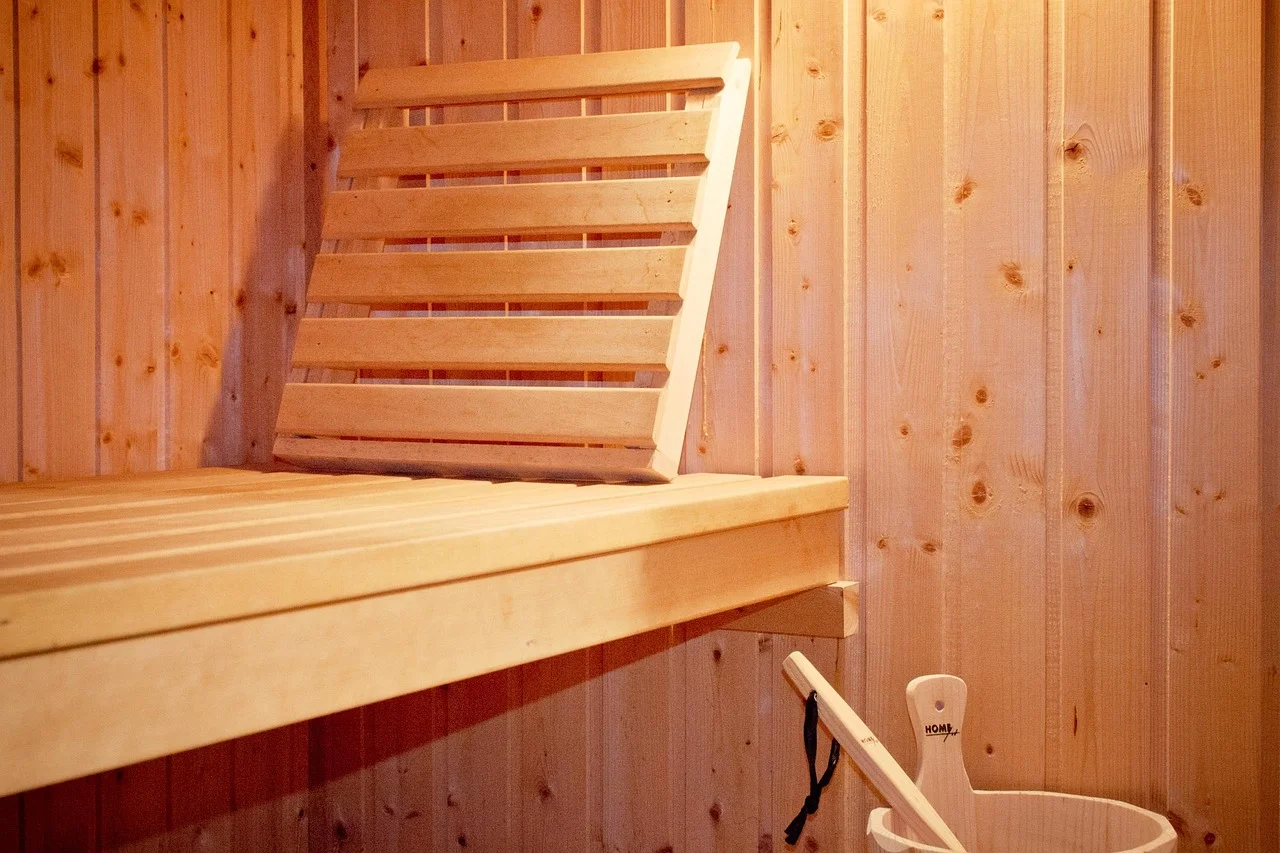
A sauna is a small wooden room heated to 70–100°C with a stove (electric or wood-fired) that warms a pile of stones. Pour water on the stones and you produce löyly — the burst of steam that briefly raises the perceived temperature dramatically. You sit on a wooden bench, sweat, leave to cool down, and (often) repeat.
That's the mechanical version. Culturally, sauna has been daily-life infrastructure in Finland for over 2,000 years and has become global wellness infrastructure in the last twenty. The Finnish version was the original; the German Saunalandschaft model, the Swedish bathhouse tradition, the Norwegian floating-sauna scene, and the contemporary American sauna boom are all variations on the same basic idea.
Sauna isn't:
- A "detox" mechanism — sweat doesn't meaningfully eliminate toxins
- A weight-loss tool — the post-session scale drop is water that returns
- A substitute for exercise — it produces a moderate cardiovascular load, comparable to brisk walking, not running
Sauna is:
- One of the better-researched lifestyle interventions for cardiovascular and brain health, when done regularly
- A reliable way to wind down before sleep
- A useful recovery tool for athletes and active people
- The most accessible "warm room" available in most northern climates
For the broader research picture, see our longevity guide, heart health guide, and myths and misconceptions.
The four common sauna types
Most public sauna facilities offer one or more of these. Each produces a slightly different experience and slightly different benefits.
Traditional Finnish sauna. 80–100°C, low humidity unless you pour water on the stones. The original format and the one with the strongest evidence base. Sessions are 10–20 minutes per round.
Infrared sauna. Air at 50–60°C, with infrared heaters warming you directly via radiation. Gentler, longer sessions (30–45 minutes), smaller cardiovascular load. Common in home installations because of lower power requirements.
Steam room (Turkish bath / hammam). Air at 40–50°C with near-saturated humidity. Different mechanism — heat transfer is via the humid air rather than radiant heat. Best for sinus and respiratory benefits.
Bio-sauna (warm sauna, sanarium). A middle ground — 50–60°C with moderate humidity. Common in German Saunalandschaften. Designed for longer sessions tolerable to a wider range of users.
For a deeper comparison, see our sauna types guide and infrared vs traditional comparison.
For your first visit, traditional Finnish or bio-sauna are the most representative starting points. Pick whichever the local facility offers.
What to bring
Less than you'd think:
- A towel for sitting. Mandatory across essentially every sauna culture — bare skin on wood is universally taboo. Most facilities provide one or rent for a small fee.
- A second towel for drying. Optional but useful.
- A swimsuit if applicable. Conventions vary by country (see below). Bring one and decide on entry.
- Water bottle. You'll lose 0.5–1 kg of water per 30 minutes. Pre-hydrate; rehydrate after.
- Flip-flops for the locker room and shower areas at public facilities. Hygiene plus the floor is often warm.
- Hair tie. Long hair gets damp and uncomfortable.
Don't bring: phones (universally banned in sauna areas), heavy moisturizer (it traps heat against skin), or expensive jewelry (heats up uncomfortably).
For the full packing list, see what to bring to a sauna visit.
Naked or swimsuit?
This depends entirely on the country and facility:
- Finland: Naked is the default in almost every public sauna. Separated by gender at most public places.
- Germany / Austria / Switzerland: Naked is mandatory in most public Saunalandschaften. Mixed-gender is standard.
- Sweden: Swimsuit usually allowed; mixed-gender standard.
- Norway: Swimsuit standard at floating saunas; mixed-gender.
- Iceland: Swimsuit required at public pools and spas.
- United States / United Kingdom / Canada: Swimsuit required at virtually all commercial facilities.
Watch the signs at the entrance. Watch what the regulars do for the first five minutes. Match the local convention; don't try to negotiate around it. For the full breakdown, see our sauna etiquette by country guide.
What to actually do during your first visit
A sensible first-time protocol:
- Shower with soap before entering. Then dry off — entering wet ruins the humidity for everyone.
- First round: short. Pick the lowest bench (heat stratifies — top is much hotter). Sit on your towel. 8–10 minutes is plenty for a first round at 80–85°C. Leave when you're uncomfortable, not when you're suffering.
- Cool down: at least 5 minutes. A cool shower (not ice cold for first-timers), or just air-cool in the lounge area. This is where the parasympathetic shift starts.
- Hydrate. Half a glass of water during cool-down.
- Second round: longer. 10–15 minutes. Now you can move up a bench if you're comfortable.
- Cool down again. Same protocol.
- Optional third round. 8–10 minutes. Many regulars stop at two; three is the upper end for a first session.
- End with a warm shower and unhurried dressing. The post-sauna calm is genuinely the best part — don't rush past it.
Total time: about 60–90 minutes. Plan accordingly.
For more detailed pre-visit prep, see how to prepare for your first sauna visit and what to expect at a public sauna.
How long should you stay in?
Two questions get conflated here.
Per round: 10–20 minutes is the typical range. Beginners should start at the lower end. The Finnish cohort data showed protective effects strongest in users staying 19+ minutes per session, but that's a long-term target, not a first-visit one.
Per visit: 30–60 minutes of total heat exposure across multiple rounds is typical for experienced users. First-timers should aim for 20–30 minutes total.
The honest signal: leave when your body says enough — not when the clock does. Dizziness, headache, racing heart, or just intuition telling you to leave are all valid. Pushing through doesn't earn anything in sauna context. See how long should you stay in a sauna for the full discussion.
The basics of sauna etiquette
A short list of rules that hold in most sauna cultures:
- Sit on a towel. Always. Including your feet.
- No phones. Universally banned in sauna areas — not just impolite, often grounds for ejection.
- Quiet voices. Volume varies by culture but loud is unwelcome everywhere.
- No alcohol inside the sauna. A beer afterward is fine in many cultures. Inside the heat, never.
- Shower before entering. Then dry off.
- Don't pour water on stones unless you've checked the local convention. Some saunas don't allow it; some require asking the others first; some have a ceremonial pour by staff (e.g., Aufguss in Germany).
- Leave your phone in your locker.
For the full etiquette breakdown, including conventions across Finland, Germany, Sweden, Norway, Iceland, and Japan, see our sauna etiquette by country guide.
Building a routine
If you want the actual long-term benefits the research supports — cardiovascular protection, better sleep, mood improvement, recovery — the dose-response curve is clear:
- Floor: 1 session per week. Below this, no measurable benefit in the cohort data.
- Significant benefit: 2–3 sessions per week. This is where the research starts showing meaningful effects.
- Strongest effect: 4–7 sessions per week. The Finnish KIHD data showed mortality benefit peaking here.
For most people outside Finland, 2–3 weekly sessions is the realistic target. That's where consistency and sustainability work for non-Finnish life patterns.
For the optimal routine, see our best sauna routine for beginners and how often should you use sauna guides. For specific goals — better sleep, athletic recovery, stress management — our targeted guides go deeper.
When to skip the sauna
A few situations where it's better to wait:
- Active fever or systemic infection — wait 48 hours after fever resolves
- Recent or unstable cardiovascular conditions — get cleared by your physician first
- Severe uncontrolled hypertension — get the BP controlled before adding the cardiovascular load
- Pregnancy — particularly the first trimester (see sauna while pregnant)
- Dehydration from any cause — heavy exercise, recent illness, hot weather
- After heavy alcohol consumption — combines poorly with thermal stress
- Acute injuries — heat amplifies inflammation in the first 48–72 hours
For the full safety picture, see our sauna safety tips guide.
The honest expectations
If you start a 2–3 sessions per week sauna routine today, here's roughly what to expect:
- First session: Possibly slight dehydration headache the next day if you didn't hydrate well. The "post-sauna calm" is real and noticeable.
- First two weeks: Better sleep on sauna nights. Possibly slightly improved mood on sauna days.
- First two months: Consistency starts to compound. Resting heart rate may drop slightly. You'll find the heat easier to tolerate.
- First year: This is where the cardiovascular and stress-management benefits become measurable in things like blood pressure, HRV (if you track it), and subjective stress reactivity.
Sauna isn't transformation. It's a gradual lifestyle additive that compounds reliably with consistency. Most regular users report it's the most consistently rewarding wellness habit they've adopted — not because of any single session but because of the cumulative effect over months and years.
Where to take your first sauna
If you have a choice, the order of authenticity for first-time experiences:
- A Finnish-style facility in Finland. Helsinki's Löyly, Tampere's Rajaportin Sauna, or any well-run public sauna in Helsinki, Tampere, or Turku. The cultural depth is unmatched.
- A German Saunalandschaft. Berlin's Vabali, Munich's Therme Erding, or Baden-Baden's Caracalla Therme. Multiple sauna types in one ticket; gentlest learning curve via the bio-sauna option.
- An Oslo or Bergen floating sauna. Oslo's SALT, Heit Bergen, or Bryggen Sauna. The contemporary design-led version of the tradition.
- A local hotel spa or wellness facility. Lower cultural friction, more familiar environment for first-timers. Available in most cities.
Bottom line
Sauna is one of the more consistently rewarding wellness habits available — backed by real research, accessible in most cities, and gradually compounding with consistency. Your first visit is uncomfortable in mild ways and intriguing in others. By your fifth or sixth session, the heat starts to feel normal and the benefits start to register subjectively.
Start with one weekly session. Build to 2–3 over the first couple months. Read the etiquette for your country before going somewhere new. Don't believe the marketing claims; do trust the cumulative effect over months.
Find a sauna to start. Browse listings near you, or read our companion guides on the optimal routine, what to bring, and country-by-country etiquette.