How to Choose Your Sauna: Finnish, Infrared, Steam, or Bio
Four meaningfully different sauna formats: Finnish, infrared, steam, and bio-sauna. A decision framework beyond the usual Finnish-vs-infrared frame.
Most sauna shopping starts with a binary question — Finnish or infrared? — and stays there. The reality is that there are at least four meaningfully different heat-exposure formats commonly available, each with a distinct mechanism, distinct experience, and distinct evidence base. Picking the right one for your situation depends on factors most decision guides don't address.
This guide walks through the four main types side-by-side, gives you a decision framework that goes beyond "Finnish for benefits, infrared for convenience," and helps you think about what's actually right for your goals, body, space, and budget.
The four main types
A quick anatomy of each, then we'll get into the comparisons.
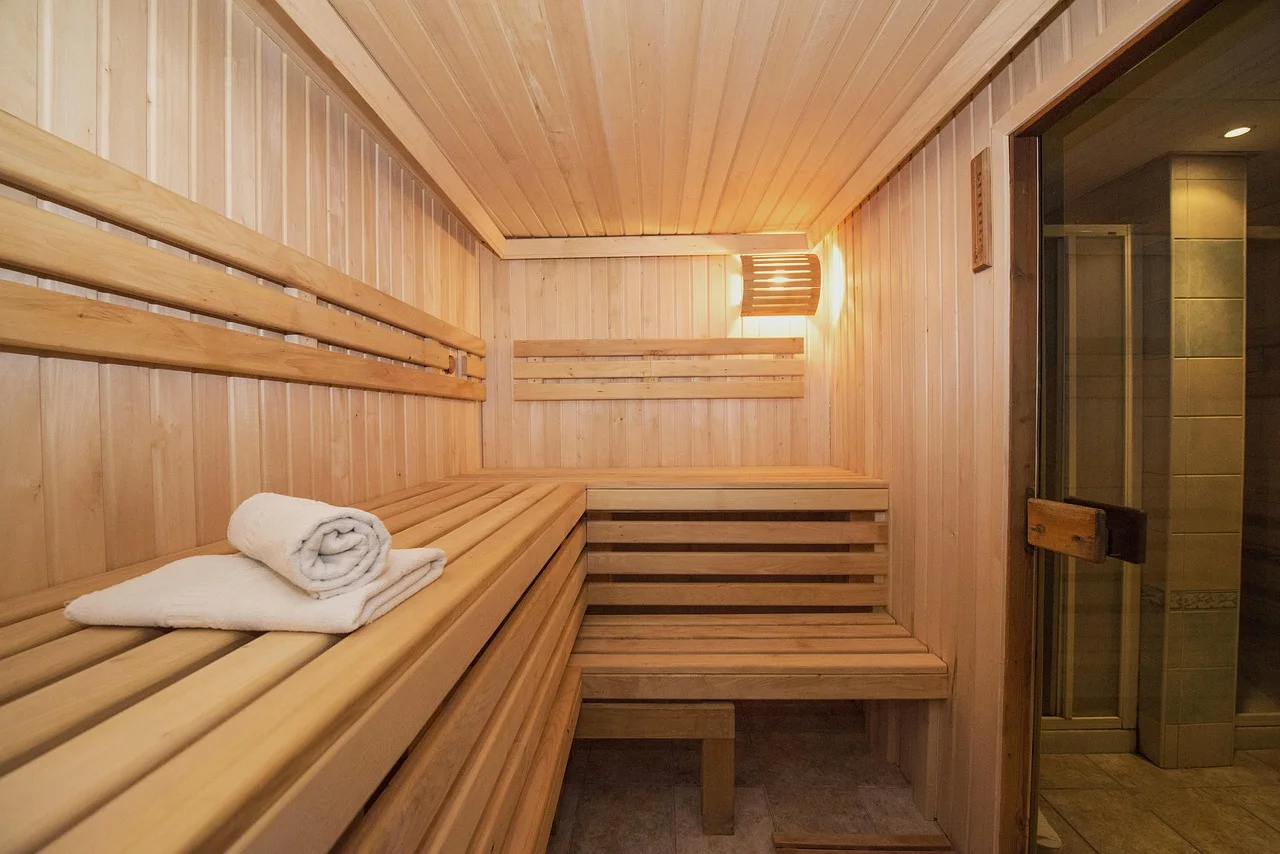
Traditional Finnish sauna
The setup. Wood-fired or electric stove heats a pile of stones to 200°C+, which radiate heat into the room. Air temperature 80–100°C. Humidity is low (10–20%) until you pour water on the stones, which produces löyly — a flash of high-humidity steam that dramatically raises the perceived temperature.
The experience. Heat hits hard, especially after löyly. Sweat starts within 3–5 minutes. 15–20 minutes feels like genuine work. Most users do 2–3 rounds with cool-down breaks.
The evidence base. The strongest of any modality. The Finnish KIHD studies linking 4–7 weekly saunas to 40% lower mortality, 50% lower cardiovascular death, and 66% lower dementia risk all used Finnish-style traditional saunas at this temperature range.
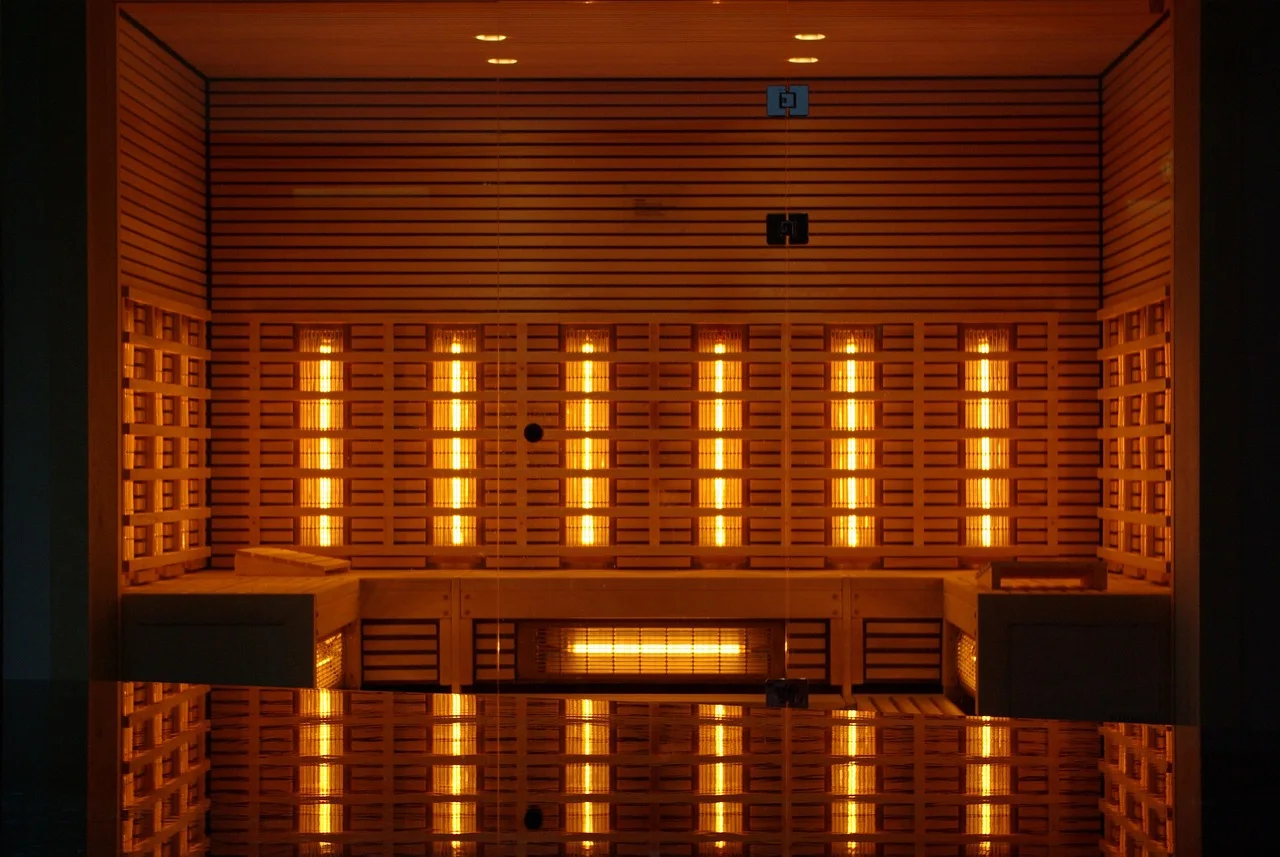
Infrared sauna
The setup. Far-infrared heaters emit 5–14 micron wavelength radiation directly to your skin and the first millimeter beneath it. Air temperature stays low (50–60°C); the heating happens via radiation rather than hot air.
The experience. Walking in feels gentler. Heat sneaks up; sweat usually starts at 8–15 minutes. Sessions of 30–45 minutes are common, often as a single session rather than multiple rounds.
The evidence base. Thinner. Mechanistic studies show real cardiovascular and skin benefits over weeks. Long-term outcome data comparable to the Finnish work doesn't exist for infrared.
Steam room (Turkish bath / hammam)
The setup. Air at 40–50°C with near-saturated humidity (95–100%). The high humidity prevents evaporative cooling, so perceived temperature is much higher than the thermometer suggests. Heat transfer happens through hot, water-saturated air contacting skin.
The experience. Very different from dry sauna. The room feels enveloping rather than radiantly hot. Sweat starts almost immediately because there's no evaporative cooling. Sessions are typically shorter (10–15 minutes) because the cumulative humidity load is significant.
The evidence base. Limited. Some studies on respiratory benefits and short-term cardiovascular effects, but no large cohort outcome data. Mechanistically, steam rooms produce a different stress profile than dry sauna — milder cardiovascular load, larger respiratory effect.
Bio-sauna (warm sauna, sanarium)
The setup. A middle-ground category common in German Saunalandschaften. Air temperature 50–60°C with moderate humidity (40–55%). Often paired with chromotherapy lighting and aroma. Sometimes called "sanarium" or "soft sauna."
The experience. Designed to be tolerable for longer sessions (20–30 minutes) and accessible for users who find traditional sauna too intense. Sweat is moderate; cardiovascular load is meaningfully smaller than 90°C Finnish.
The evidence base. Almost nonexistent as a separate category. Mechanically falls between Finnish sauna and steam room; benefits probably scale accordingly. Most clinical literature treats bio-sauna as "low-intensity sauna" rather than as a distinct modality.
The comparison table
| Factor | Finnish | Infrared | Steam | Bio-sauna |
|---|---|---|---|---|
| Air temperature | 80–100°C | 50–60°C | 40–50°C | 50–60°C |
| Humidity | 10–20% (low) | <20% (low) | 95–100% (high) | 40–55% (medium) |
| Heat-up time | 30–45 min | 10–15 min | 15–20 min | 15–25 min |
| Typical session | 15–25 min | 30–45 min | 10–15 min | 20–30 min |
| Power draw (home) | 4–9 kW | 1.5–3 kW | 2–4 kW | 3–5 kW |
| Voltage (home) | Often 240V | Usually 120V plug-in | Usually 240V | Often 240V |
| Cardiovascular load | Strong | Moderate | Mild–moderate | Mild |
| Long-term cardio evidence | Strongest | Mechanistic only | Limited | Limited |
| Skin barrier impact | Drying without aftercare | Drier than steam | Most hydrating | Moderate |
| Best for daily use | If experienced | Yes (gentlest dry option) | Less so (humidity load) | Yes |
| Best for cold/sinus relief | Modest | Modest | Strongest | Moderate |
| Best for muscle recovery | Strong | Strong | Modest | Modest |
| Best for skin barrier function | Net positive | Generally well-tolerated | Generally well-tolerated | Generally well-tolerated |
The decision framework
Rather than walk through every combination, here's how to actually think about which to pick given your situation.
Start with your primary goal
If your goal is cardiovascular health, longevity, or dementia risk reduction: Traditional Finnish. The evidence base is unambiguous. The 80–90°C temperature range is what produces the adaptations the long-term data captures.
If your goal is stress management, sleep, or general relaxation: Any modality works. The autonomic adaptations and cooling-cascade benefits transfer reasonably across formats. Pick whichever you'll actually use 3+ times per week.
If your goal is athletic recovery and heat acclimation: Traditional Finnish, post-workout. The plasma volume expansion mechanism is best supported in Finnish-style heat. Infrared can substitute if needed but the effect size is smaller.
If your goal is respiratory relief (sinusitis, mild bronchitis): Steam room. The high-humidity warm air specifically targets mucociliary clearance. Finnish or infrared sauna doesn't deliver this benefit nearly as cleanly.
If your goal is skin condition support (rosacea, eczema, sensitive skin): Steam or bio-sauna over Finnish or infrared. Lower temperatures plus higher humidity reduce the trans-epidermal water loss that aggravates these conditions.
If your goal is just to get into sauna habit cheaply at home: Infrared. Plug-in 120V, lower energy bills, faster heat-up, lower install cost. The benefit ceiling is lower than Finnish but the practical accessibility is much higher.
Then consider your situation
Apartment with standard 120V power: Infrared is the only feasible option for most home installations. Finnish, steam, and bio-sauna typically need 240V. Infrared cabins fit in modest spaces and plug into standard outlets.
House with 240V power and basement/garage space: Any option works. Finnish gets you the strongest evidence base. Bio-sauna is a sensible compromise for users who want something tolerable for longer sessions.
Outdoor garden space: Wood-fired Finnish becomes very compelling. Custom builds are possible with all formats but Finnish has the longest tradition of outdoor installations and the strongest reseller market.
Heat-sensitive medical conditions (rosacea, autonomic dysfunction, mild cardiovascular concerns): Bio-sauna or infrared. Lower thermal load, lower cardiovascular stress, more tolerable with chronic conditions. Always check with your physician for specific contraindications.
Pregnancy: This is largely a temperature-and-duration question independent of modality. See our sauna while pregnant guide — all formats need similar caution, with reduced temperatures and durations.
Children: Bio-sauna or low-temperature Finnish are most appropriate for children. Infrared is generally fine for older children. Steam rooms are sometimes flagged as more concerning for very young children due to humidity and respiratory considerations.
Finally, consider what you'll actually use
The honest truth: the best sauna is the one you'll actually use 3–4 times a week. A perfectly-spec'd Finnish sauna in your basement that you use once a month delivers less benefit than a $2,000 infrared cabinet you use daily.
Track your actual usage if you've been thinking about home sauna for a while. Six months of public-sauna data — frequency, duration, what you went for — tells you whether you're a Finnish user, an infrared user, or someone who'd benefit most from a multi-format setup that the Saunalandschaft model offers.
What about combining types?
Several practical patterns work well:
Traditional Finnish + steam room (the German Saunalandschaft model). The two are complementary — Finnish for the cardiovascular and thermal stress, steam for the respiratory and skin benefits. Most German wellness facilities offer both, and serious users alternate within a single visit.
Traditional Finnish at a club + infrared at home. A common pattern for serious users. Finnish 1–2 times a week for the strong cardiovascular benefit, infrared 3–4 times a week at home for the daily recovery and routine maintenance.
Bio-sauna as gateway to Finnish. Some users start with bio-sauna and gradually adapt to traditional Finnish over months. The lower-temperature acclimation makes the transition feel less abrupt.
All four in one visit (German Saunalandschaft). Some larger facilities (Therme Erding, Vabali, Friedrichsbad) offer all four in one ticket. A four-hour visit lets you sample each and find your preference.
A few common mistakes
Treating infrared as "lite Finnish." It's a different format, not a watered-down version. The infrared mechanism (radiation to skin, low air temperature, longer sessions) produces a meaningfully different physiological profile. Don't expect it to deliver Finnish-style outcomes at half the temperature.
Treating steam as "stronger sauna." It's not. Steam rooms produce more sweat (no evaporative cooling) but less cardiovascular load (lower core temperature elevation). The intensity feeling is real; the cardiovascular adaptation isn't equivalent to Finnish.
Choosing based on heat tolerance alone. "I can't handle 90°C" is a fixable problem with gradual adaptation. Most users who start at 70°C and add 5°C every few weeks comfortably tolerate 85°C+ within 2–3 months. Don't permanently rule out Finnish sauna based on the first uncomfortable session.
Underestimating bio-sauna for daily use. It's the most-overlooked category and arguably the best fit for users who want regular long sessions without the intensity of Finnish or the dryness of pure infrared.
Following marketing claims about specific health outcomes. Most modality-specific health claims (especially infrared brand claims) overstate what their research supports. The evidence-based summary: Finnish has the strongest outcome data, infrared has reasonable mechanistic data, steam has some respiratory data, bio-sauna has very little.
Where to test before committing
For a serious decision (especially home installation), the highest-leverage research step is genuinely sampling the formats. Practical options:
- German Saunalandschaft visit. A single-day visit to a place like Therme Wien, Vabali Berlin, or Therme Erding lets you experience all four modalities back-to-back. Four hours of sampling, one ticket.
- Hotel spas. Most full-service hotel spas have at least Finnish + steam, often all four. Day-pass access lets you try without commitment.
- Local sauna clubs. Membership-based sauna clubs increasingly offer multiple modalities. A trial membership for a month is a cost-effective comparison.
- Demonstration showrooms. Sauna manufacturer showrooms and good local dealers will often let you sit in their display units. Less natural than real-world use but useful for the side-by-side spec comparison.
Bottom line
The four main sauna formats are not interchangeable. Traditional Finnish has the strongest evidence for cardiovascular, longevity, and brain-health outcomes. Infrared is the practical home-installation choice with reasonable but smaller benefits. Steam room is the right answer for respiratory-focused use. Bio-sauna is the underrated middle-ground for users who want longer comfortable sessions.
The best choice depends on your primary goal, your situation, and — critically — what you'll actually use consistently. A perfectly-spec'd format you don't use beats nothing; the best format you use 3–4 times a week beats the perfect format you use monthly.
For deeper coverage of specific decisions: our infrared vs traditional and sauna vs steam room guides go deeper on those specific comparisons. The home sauna guide covers installation considerations once you've picked a format.
Browse listings to test formats locally. Most German Saunalandschaften in Berlin, Munich, and Baden-Baden offer all four modalities in one visit. Browse listings for facilities near you.