Hvilken temperatur bør en badstu ha? Den komplette guiden
For kjølig og du mister helsegevinstene. For varmt og du risikerer sikkerheten. Å forstå badstuens temperatur — og hvordan du styrer den — er fundamentalt for praksisen.
Badstutemperatur er ikke ett enkelt tall. Det avhenger av type badstu, kulturell tradisjon, fuktighetsnivå, ditt erfaringsnivå og hva du prøver å oppnå. Å forstå disse variablene hjelper deg å vurdere steder, styre økter effektivt, og forklare saunamesteren nøyaktig hva du trenger.
Tradisjonell finsk badstu: 80–100 °C
Den tradisjonelle finske badstuen drives på 80 °C til 100 °C med relativ fuktighet på cirka 10–20 %. Dette er temperaturområdet forbundet med de finske studiene på kardiovaskulær helse, demensreduksjon og levetid.
Ved 80 °C er varmen betydelig, men håndterbar for de fleste friske voksne, særlig på de nedre benkene. Ved 95–100 °C er luften nær taket ekstremt varm — erfarne brukere sitter i denne høyden, men nybegynnere bør starte lavere.
Den opplevde varmen avhenger også sterkt av fuktighet. Å tilsette vann på steinene (løyly) øker fuktigheten midlertidig til 30–40 %, noe som dramatisk øker den følte intensiteten av varmen. En velhåndtert løyly på 85 °C kan føles mer intens enn et tørt miljø på 95 °C.
Under 70 °C: Ingen ekte finsk badstuopplevelse. Du vil svette, men den kardiovaskulære stimulansen og varmesjokkproteinaktiveringen forbundet med helsegevinstene oppnås ikke fullt ut.
Over 110 °C: Sjelden og ikke anbefalt for de fleste brukere. Noen tradisjonelle finske røykbadstuer når 110–120 °C under oppvarming, men får kjøles ned til 90–100 °C før bruk.
Tysk Aufguss-badstu: 85–95 °C
Tyske badstuer sikter typisk mot 85–95 °C — litt lavere enn de varmeste finske badstuene — for å gi rom for den utarbeidede Aufguss-seremonien, der saunamesteren svinger et håndkle for å sirkulere damp. Sirkulasjonen av luft øker den opplevde intensiteten betydelig, og gjør at en 90 °C Aufguss-badstu føles betydelig varmere enn 90 °C stillestående luft.
Dampbad: 40–50 °C
Dampbad opererer ved mye lavere temperaturer — 40 °C til 50 °C — men ved 100 % relativ fuktighet. Fordi svetten ikke kan fordampe i mettet luft, kan kroppen ikke kjøle seg ned effektivt, og den opplevde temperaturen er betydelig høyere enn lufttemperaturen tilsier.
Dampbad er mildere for kardiovaskulære nybegynnere, men hardere for dem med luftveissensitivitet. De bør ikke forveksles med badstuer — de fysiologiske mekanismene er forskjellige.
Infrarød badstu: 45–65 °C
Infrarøde badstuer drives ved mye lavere lufttemperaturer — typisk 45 °C til 65 °C — fordi de varmer kroppen direkte via infrarød stråling snarere enn å varme den omkringliggende luften. Den fysiologiske effekten skiller seg fra tradisjonell badstu: kjernekroppstemperaturen stiger fortsatt, og svetten er betydelig, men den kardiovaskulære stimulansen er mildere.
Infrarøde badstuer er populære for sin tilgjengelighet (lavere temperatur, lettere å tåle) og sine spesifikke påstander om dyptgående vevoppvarming og avgiftning. De er ikke en direkte erstatning for tradisjonell badstu og bør vurderes på sine egne premisser snarere enn som en billigere versjon av finsk badstu.
Slik sjekker du badstuens temperatur
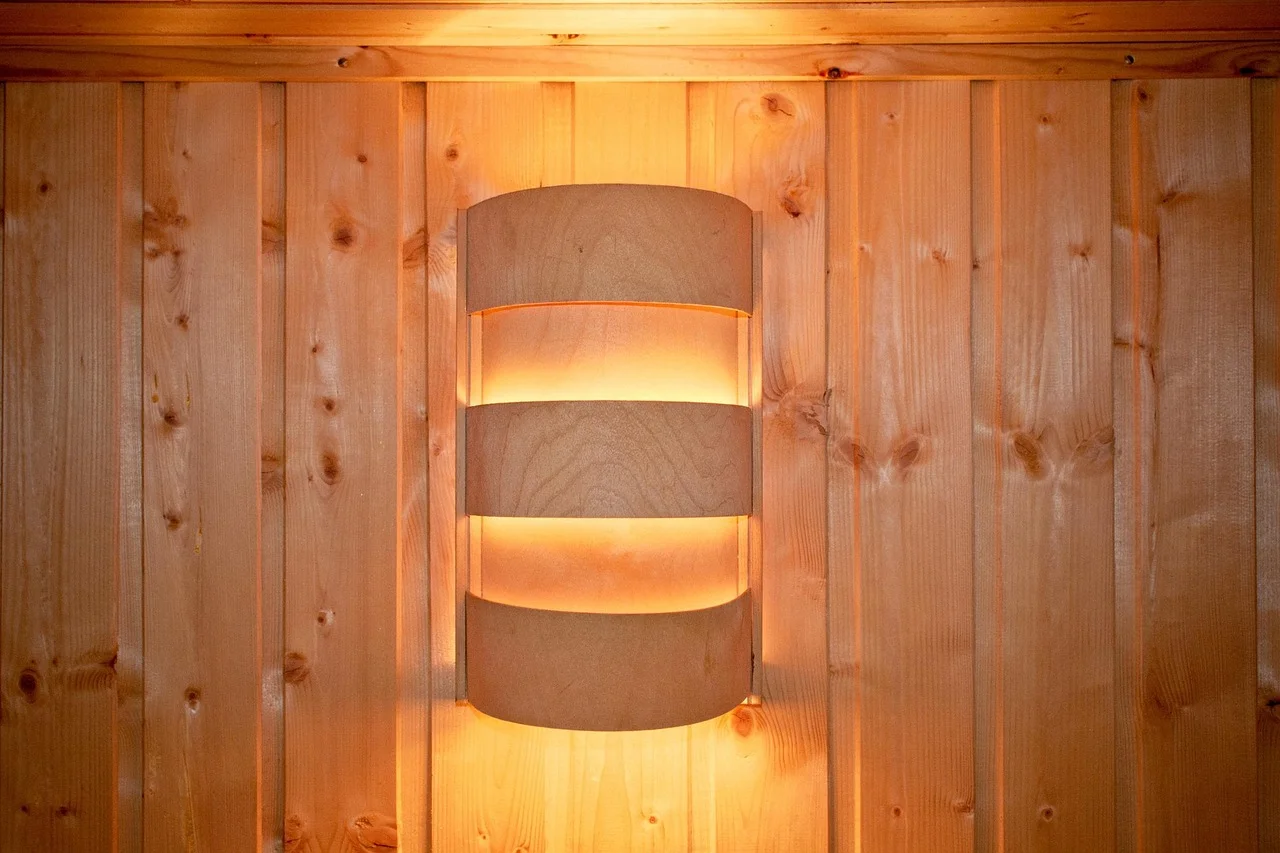
De fleste gode badstuer har et termometer synlig inne i rommet, typisk montert på veggen i benkhøyde. Dette gir deg lufttemperaturen i den høyden — temperaturen nær taket vil være 10–20 °C høyere.
Hvis et badsted ikke kan oppgi driftstemperaturen, eller hvis badstuen føles merkbart kjølig når du går inn, er det et varselsignal. Vanlige årsaker til underoppvarmede badstuer:
- Utilstrekkelig oppvarmingstid: En tradisjonell badstu trenger 45–60 minutter for å nå temperatur. Noen steder forhaster dette.
- Underdimensjonert ovn for rommet: En ovn dimensjonert for et lite rom kan ikke varme et større rom skikkelig.
- Dårlig isolasjon: Varme slipper ut gjennom vegger, dørtetninger eller ventilasjonsåpninger.
- Fuktige eller våte steiner: Hvis vann er tilsatt for ofte uten å la steinene gjenoppvarme, mister ovnen effektivitet.
Den riktige temperaturen for deg
Hvis du er ny til badstu, start på 70–80 °C på de nedre benkene. Etter hvert som du tilpasser deg over flere økter, gå opp til høyere benker og høyere temperaturer.
Hvis du er erfaren og søker maksimal helsegevinst, er 85–95 °C på øverste benk målområdet forbundet med de finske studiene.
Hvis du har kardiovaskulær sensitivitet eller restituerer fra sykdom, reduserer 70–80 °C ved nedre benkhøyde intensiteten samtidig som du fortsatt får genuine fordeler.
Den perfekte badstutemperaturen er den som er så varm som du kan være komfortabelt i 10–12 minutter mens du puster normalt og kjenner musklene slappe av — ikke den høyeste temperaturen du teknisk sett kan overleve.
Ofte stilte spørsmål
Er 90 °C for varmt? Ikke for de fleste voksne — det er den finske konvensjonen og der den kardiovaskulære kohortdataen ble samlet. Nybegynnere bør starte på 70–75 °C og tilpasse seg over uker.
Er 60 °C for kaldt? Bio-badstuer og infrarøde kabiner kjører typisk 50–60 °C og gir en annerledes fysiologisk profil — mildere, lengre økter, mindre kardiovaskulær belastning. Ikke "for kaldt" for det de er designet for.
Best for førstegangsbesøkende? 70–80 °C i en tradisjonell finsk badstu, sittende på den nedre benken. Den nedre benken er meningsfullt kjøligere enn toppen — varmen lagdeler i en badstu, noen ganger med 20 °C effektiv temperatur når damp tilsettes.
Avhenger det av hva jeg vil? Ja. Varmt-og-raskt (90 °C, 10–15 min): kardiovaskulær tilpasning og levetidsgevinster. Mildt-og-langt (60 °C, 30–40 min): infrarødstilavslapning. Dampbad (45 °C, høy fuktighet): luftveisgevinster.
Kan det være for varmt for sikkerhet? Over 100 °C med betydelig fuktighet stiger risikoen kraftig for kardiovaskulære hendelser selv hos friske voksne. De fleste velorganiserte offentlige badstuer kapper på 95–100 °C; noen spesialsteder presser høyere, men med økt risiko.
Relatert lesing
Slik velger du badstutype dekker formatvurderingene; Infrarød vs tradisjonell dekker temperatur–modalitetsinteraksjonen.